
Rummy - Classic Card Game
MobilityWareCard
4.71.44K Reviews
- Version
- 1.5.1.1839
- Installs
- 1.00M
- Age Rating
- Everyone
Screenshots
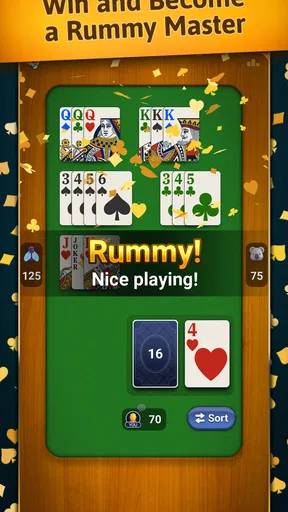
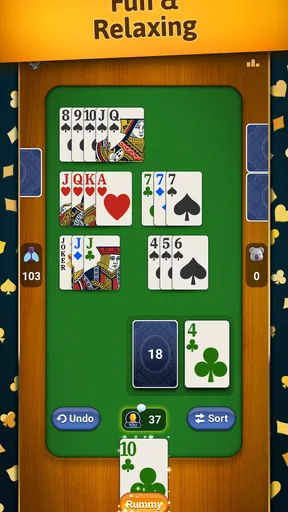
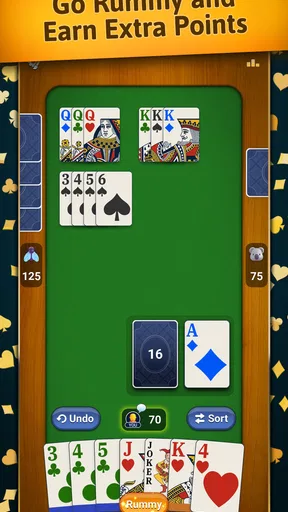
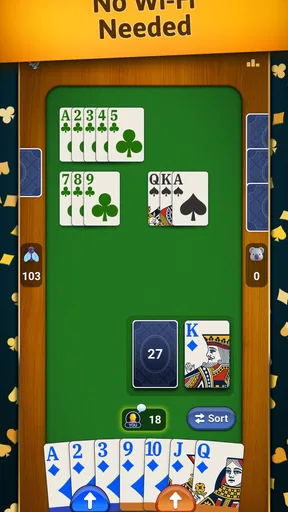
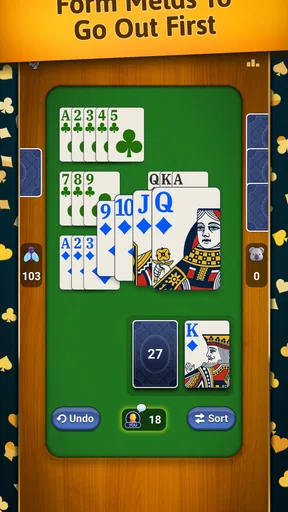
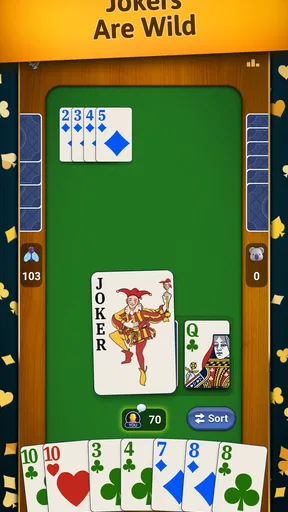
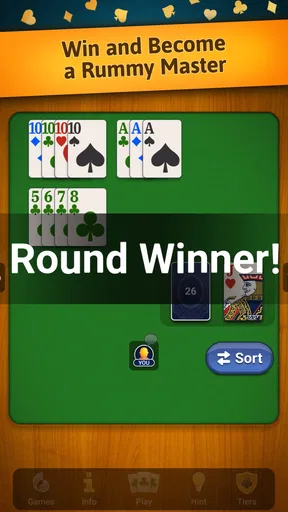
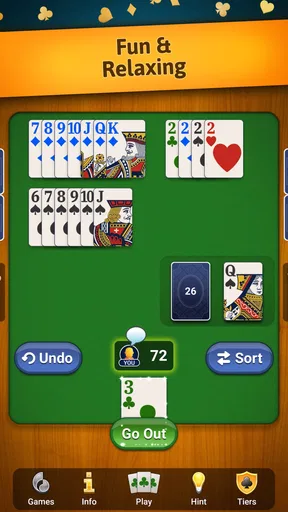
Our Review of Rummy - Classic Card Game
 Analysis by Appyee
I spent time with Rummy - Classic Card Game looking at one question above all: how well does it turn the familiar goal of emptying your hand into a comfortable, repeatable mobile game? My answer is positive, with an important qualification. This is a focused card game for people who already enjoy Rummy or want a calm way to practise decisions around sets, sequences, Jokers, and timing. It is not trying to be a large, story-driven game, and that narrow purpose is exactly why it can fit so neatly into a short break.
Developed by MobilityWare, this free card game has the straightforward appeal of a traditional tabletop session without requiring another person to sit across from you. The presentation is easy to understand, the rules become familiar quickly, and the main satisfaction comes from choosing when to build combinations and when to hold back. I found myself returning to it less for spectacle and more for the small mental challenge of reading my hand correctly.
Why the Go Out objective matters more than it first appears
The central capability is simple: I try to play every card in my hand and Go Out, with Jokers available as part of the puzzle. That objective gives each turn a useful tension. A card that looks helpful now may be more valuable later, while a Joker can rescue an awkward hand but may also be worth preserving until it completes a more difficult arrangement.
That changes the experience from merely matching cards into managing uncertainty. I am not only asking which combination I can make immediately. I am also considering which cards are safe to discard, whether a partially formed sequence is worth protecting, and how much flexibility I lose by committing a Joker too early. Those choices are the real reason the game remains interesting after the basic rules stop feeling new.
The strongest part of the design is the balance between a familiar rule set and decisions that still punish careless play. A quick round can feel relaxing, but a poor discard can quietly leave the rest of the hand difficult to organise. When I play too quickly, I tend to focus on the obvious pair or sequence and overlook the value of keeping several possible routes open.
That makes the game suitable for two different moods. I can use it as a light distraction when I have only a few minutes, or I can slow down and treat each hand as a small planning exercise. The same basic capability supports both styles, although players looking for action, narrative progression, or constant novelty will probably find the format restrained.
What the Joker adds to everyday decisions
Jokers are not just convenient wild cards. Their presence makes hand evaluation less rigid because they can bridge a gap or complete a combination that would otherwise remain stranded. In my experience, the best use is rarely the first legal use I notice. I get more value by asking which placement removes the most uncertainty from the remaining hand.
A practical habit is to avoid treating a Joker as an emergency button. If I use it immediately to finish a small combination, I may be left with several unrelated cards and no flexible way to improve the rest. Holding it for a turn can be uncomfortable, but that patience often gives me more options. This is one of the less obvious lessons the game encourages: a legal move is not automatically a good move.
There is also a useful trade-off between finishing a combination and protecting future draws. When my hand contains cards that could belong to more than one sequence, I try not to lock them into a single plan too soon. A Joker can make that approach safer, but it cannot replace sensible discarding. The game rewards keeping alternatives alive rather than simply assembling the first group that fits.
How a typical session feels on a phone
The game is easy to approach because its category is immediately clear: this is a classic card experience rather than a complicated hybrid. I do not need to learn a large collection of systems before playing. The basic loop is the hand, the draw or discard decision, the attempt to form combinations, and the push toward going out.
That simplicity works particularly well on a phone. I can play while waiting for an appointment, during a short commute when it is safe and appropriate to do so, or at home when I want something more engaging than passive scrolling. A round does not demand the same uninterrupted attention as a strategy campaign, yet it still gives me a reason to think about the next move.
The most effective way to play is to sort the hand mentally by potential rather than by appearance. I look first for combinations that are already close to completion, then for cards that can connect in more than one direction. Only after that do I decide which card is least useful. This workflow prevents the common mistake of discarding a card that seems isolated but is actually the only bridge between two possible sequences.
Another useful approach is to track what has become less likely as the hand develops. I do not need perfect memory of every card. Simply noticing which ranks or suits have repeatedly failed to appear helps me stop waiting for an unlikely rescue. In a short session, this turns the game into a gentle memory exercise without making it feel like a formal training tool.
A realistic five-minute use case
Imagine I have five minutes before leaving for work. I open the game, play a hand, and concentrate on reducing the number of disconnected cards rather than rushing toward an immediate finish. If the hand becomes awkward, I can still make a few deliberate decisions before putting the phone away. That makes the experience more satisfying than a game that depends entirely on reaching a dramatic checkpoint.
At lunch, I might use a different rhythm. I can play more quickly, accepting that a less-than-perfect decision is part of the break. The important point is that the game does not require a long setup or a complicated commitment. It fits naturally into small gaps, while still offering enough tactical detail for a longer, quieter session.
For someone learning Rummy, this short-session format is useful because repetition builds recognition. I begin to see why a hand feels flexible or blocked, and I become more aware of the cost of holding too many cards that depend on the same missing connection. The game does not need to lecture me about those ideas; repeated play makes them visible.
Where the experience is strongest and where it asks for patience
The clearest strength is focus. MobilityWare has placed the familiar Rummy objective at the centre instead of surrounding it with unrelated distractions. I can open the game knowing what kind of experience I will get, and that reliability is valuable for a card game intended for casual, repeat use.
The free entry point also makes it easy to try without making a commitment. The game is suitable for Everyone, which matches its accessible rules and non-violent format. It has reached more than a million installs, and its average rating is 4.7 from roughly thirty-one thousand ratings, signs that the straightforward approach has connected with a broad audience.
There are still trade-offs. A focused Rummy game can feel repetitive if I need constant changes of scenery. Players who prefer collectible-card battles, elaborate deck construction, or a strong competitive ladder may be better served by a different card title. This game’s appeal comes from refining decisions inside a familiar structure, not from continually unlocking a new universe of mechanics.
The presence of in-app purchases, ranging from $4.99 to $29.99 per item, is another point I would consider before installing. The game is free, but anyone who dislikes optional spending in mobile games should review the purchase flow carefully and avoid treating paid items as part of the basic requirement. For me, the sensible approach is to judge the free experience on its own and decide whether it already provides enough value.
There is also a psychological limitation to this kind of design. Because the objective is so clear, a bad hand can feel more frustrating than surprising. I know what I want to accomplish, so being stuck with disconnected cards is noticeable. The answer is not to force every hand into a perfect plan. Sometimes the better choice is to discard for flexibility and accept a slower route to Go Out.
How it compares with familiar alternatives
Compared with a physical Rummy deck, the mobile version is more convenient and less social. I do not need to find opponents, prepare a table, or keep track of cards manually. That makes it better for solo practice and spontaneous play, but worse when the main pleasure comes from conversation, reading another person’s habits, or sharing a relaxed evening with friends.
Compared with more elaborate digital card games, it is less demanding in terms of learning and collection management. There is no reason to spend time building a specialised deck before I can enjoy the core activity. That is a major advantage for someone who wants traditional card logic, although it may feel limited to players who expect regular content expansion or a changing metagame.
It also differs from puzzle games that offer a guaranteed solution or a carefully designed board. A Rummy hand contains uncertainty, so I have to work with what appears rather than simply follow a known path. That makes the wins feel earned, but it also means a session may depend partly on the hand I receive and on how well I adapt to it.
Who will get the most from this version of Rummy?
I would recommend it first to people who already know the broad idea of Rummy and want a dependable solo version on Android or iOS. It is also a good starting point for a newcomer who prefers learning by playing rather than reading a long rulebook. The Everyone age rating and uncluttered card focus make it approachable for family members who may not want a fast or visually intense game.
It is especially well suited to players who enjoy small decisions with visible consequences. If you like sorting possibilities, protecting flexible cards, and deciding whether a Joker is more valuable now or later, the game offers enough depth to reward attention. The best sessions are not necessarily the fastest ones; they are the hands where I recover from an awkward start by keeping my options open.
I would be more cautious about recommending it to someone seeking a social table experience. A physical deck or a multiplayer-focused alternative will be better if conversation and direct competition are essential. I would also point action-oriented players elsewhere, because the pleasure here is gradual and thoughtful rather than energetic.
Device compatibility is reasonably broad, with the current version listed as 1.5.1.1839 and support beginning with Android 8.0. That makes it a practical option for people who are not using the newest phone, although I still prefer checking that my device handles the current release comfortably before settling into regular play.
Small habits that improve the experience
My first tip is to separate “nearly complete” from “actually useful.” A pair may look promising, but if it blocks several cards that could join a sequence, keeping it can make the hand worse. I now compare each possible discard by asking how many future combinations it leaves available, not merely whether it belongs to a group at this moment.
My second tip is to delay the Joker when it is doing too little work. If it completes a combination but leaves the rest of the hand untouched, I usually look for a placement that resolves a more stubborn problem. This is a small adjustment, but it changes the Joker from a quick fix into a tool for controlling the shape of the whole hand.
My third tip is to use short sessions for practice and longer sessions for analysis. In a brief break, I focus on one habit, such as avoiding narrow sequences. When I have more time, I review the turns that left me with too many unrelated cards. That keeps the game from becoming mindless repetition and gives each session a clear purpose.
After using it this way, I see Rummy - Classic Card Game as a good example of a narrow mobile game doing one job well. It gives me a familiar card challenge, makes Jokers meaningful, and fits naturally into everyday pauses. Its limitations are equally clear: it will not replace a social deck, a competitive card battler, or a content-heavy strategy game.
For my own use, that focus is a benefit. I can return to it without relearning a system, and I can choose between a relaxed hand and a more deliberate test of planning. If that sounds like the kind of card game you want, the free version is an easy place to start. If you need constant novelty or live social interaction, I would choose another option instead.
Privacy and Permissions
See what permissions an app requests and how it handles your data.
- Other
- view network connections, full network access, control vibration, prevent device from sleeping, Google Play license check
Verdict
Strengths of Rummy - Classic Card Game
- Simple rules make it easy for beginners to start playing.
- Quick matches fit well into short breaks or commutes.
- Classic gameplay feels familiar to traditional card-game fans.
- Playable at your own pace without requiring real-time opponents.
- Useful for improving pattern recognition and strategic thinking.
Limitations of Rummy - Classic Card Game
- Limited variety may make the experience repetitive over time.
- Random card deals can sometimes outweigh careful strategy.
- Some features may require an internet connection or ads.
- The interface may feel dated compared with newer card games.
- Multiplayer options may be less engaging than dedicated card platforms.
Other Releases by MobilityWare
View All

Similar Picks in This Category
View All
Solitaire - Classic Card Games
MobilityWare4.6

UNO!™
Mattel163 Limited4.3

Spider Solitaire: Card Games
MobilityWare4.6

Solitaire.com - Classic Cards
Tripledot Studios Limited4.7

Plants vs. Zombies™ Heroes
ELECTRONIC ARTS4.1

Hearthstone
Blizzard Entertainment, Inc.4.1
Frequently Asked Questions
What is Rummy - Classic Card Game?
Rummy - Classic Card Game is a digital version of the traditional rummy card game, designed for players who enjoy arranging cards into valid sets and sequences. After reviewing the game, its main appeal is the straightforward interface, familiar rules, and quick matches. It is suitable for casual players, although the exact modes, scoring system, and available variations may differ depending on the app version.
How do you play Rummy - Classic Card Game?
The objective is generally to organize the cards in your hand into valid combinations, usually sequences of consecutive cards from the same suit and groups of cards with the same rank. Players draw and discard cards during each turn, trying to complete their hand before their opponents. New users should check the in-game tutorial or rules section because rummy variations can use different scoring, wild-card, and winning conditions.
Can I play Rummy - Classic Card Game offline?
Whether the game works completely offline depends on the version installed and the features you want to use. Many classic rummy apps offer single-player matches against computer-controlled opponents without an internet connection, while online multiplayer, leaderboards, advertisements, and account synchronization usually require connectivity. It is worth testing airplane mode after installation if offline play is important to you.
Is Rummy - Classic Card Game free to download and play?
Rummy - Classic Card Game may be available as a free download, but free access does not always mean that every feature is unlimited. The app can include advertisements, optional purchases, premium tables, extra customization, or other paid elements. Before downloading, review the Google Play Store or Apple App Store listing for current pricing, in-app purchase details, supported devices, and any subscription information.
Does Rummy - Classic Card Game involve real-money gambling?
The answer depends on the specific edition and region. A standard classic rummy app normally uses virtual points or entertainment-only matches rather than real-money betting. However, some similarly named rummy applications may offer cash contests or gambling-related features where legally permitted. Check the developer information, store description, age rating, and local regulations carefully, and avoid entering payment details unless you fully understand how the app operates.
Play our best games!


